
Games-based learning (GBL) refers to the integration of game characteristics and principles into tasks to achieve learning outcomes (University of Waterloo, 2019). In addition to providing students with a fun and engaging learning environment, GBL is often more effective than traditional approaches in improving students’ acquisition of knowledge and understanding of content (Hainey, Connolly, Boyle, & Wilson, 2016). Furthermore, GBL can produce cognitive, motivational, emotional and social benefits (Granic, Lobel, & Engels, 2014) and assist students in building 21st century skills, such as those relating to thinking, problem-solving and collaboration (Beavis, 2014). GBL is relatively simple to incorporate into the lessons because it is available through a variety of platforms, including tablets, smartphones, PCs and online, and can be applied to a diverse range of subject areas (Hainey et al., 2016).
Students as game designers
One of the most effective applications of GBL in classrooms is having students design their own games. This activity deepens students’ understanding of the programming that underlies digital games (Gee, 2005) and therefore develops students’ information and communication technology capabilities, which is one of the general capabilities of the Australian curriculum (ACARA, 2016). Furthermore, the design process fosters student creativity by allowing them to devise and implement their own ideas through game elements, such as characters, context and information (Prensky, 2007). Teachers wishing to maximise student creativity might encourage students to try to incorporate the principles that Gee (2005) identified as being central to ‘good’ games. Creating a game that aligns with these criteria is likely to foster creative thinking by encouraging students to produce novel ideas within these paramters (Edwards, 2001).
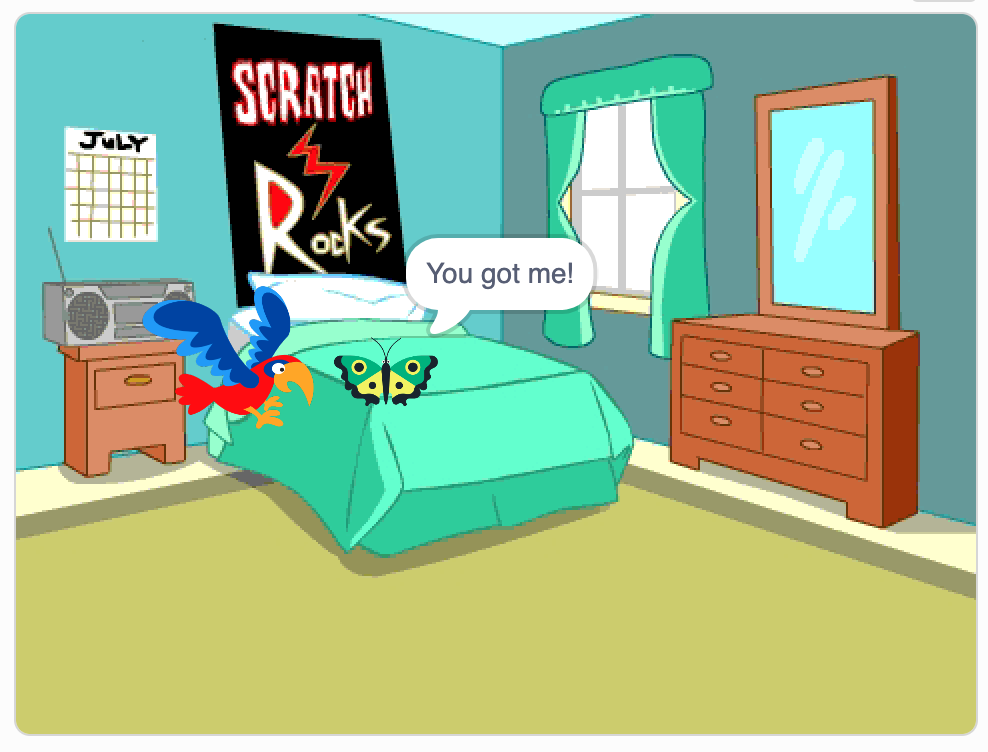
Click here to the above game, which was created using Scratch.
Limitations
One of the limitations of GBL is that the effectiveness of using it can be influenced by the game’s characteristics. For example, games that are single player, have lower realism and are played from third person perspective tend to be more effective in promoting learning than games without these characteristics (Clark, Tanner-Smith, & Killingsworth, 2016). A further challenge is that the games students create are unlikely to convey extensive information, which may result in little content knowledge being gained (Prensky, 2007). Teachers must also put appropriate safeguards in place to reduce the possibility of students encountering inappropriate content or having their privacy compromised by sharing personal data online (Beavis 2014). Finally, as with all technology, there is also the risk of distraction and technical issues.
References
ACARA. (2016). General capabilities. Retrieved from https://www.acara.edu.au/curriculum/general-capabilities
Beavis, C., Rowan, L., Dezuanni, M., McGillivray, C., O’Mara, J., Prestridge, S. & Zagami, J. (2014). Teachers’ beliefs about the possibilities and limitations of digital games in classrooms. E-learning and Digital Media, 11(6): 569-581. doi: 10.2304/elea.2014.11.6.569
Clark, D. B., Tanner-Smith, E. E., & Killingsworth, S. S. (2016). Digital games, design, and learning: A systematic review and meta-analysis. Review of Educational Research, 86(1): 79-122. doi: 10.3102/0034654315582065
Edwards, S. M. (2001). The technology paradox: Efficiency versus creativity. Creativity Research Journal, 13(2): 221-228, doi:10.1207/S15326934CRJ13029.
Gee, J. P. (2005). Good video games and good learning. Phi Kappa Phi Forum, 85(2), 33-37. Retrieved from https://gamesandimpact.org/wp-content/uploads/2012/02/GoodVideoGamesLearning.pdf
Granic, I., Lobel, A., & Engels, R. C. (2014). The benefits of playing video games. American Psychologist, 69(1): 66-78. doi: 10.1037/a0034857
Hainey, T., Connolly, T. M., Boyle, E. A., & Wilson, A. (2016). A systematic literature review of games-based learning empirical evidence in primary education. Computers and Education, 102: 202-223. doi: 10.1016/j.compedu.2016.09.001
Prensky, M. (2007). Students as designers and creators of educational computer games. British Journal of Educational Technology, 39(6): 1-19. doi: 10.1111/j.1467-8535.2008.00823_2.x
University of Waterloo. (2019). Gamification and game-based learning. Retrieved from https://uwaterloo.ca/centre-for-teaching-excellence/teaching-resources/teaching-tips/educational-technologies/all/gamification-and-game-based-learning

 James' EDUC362 Blog